
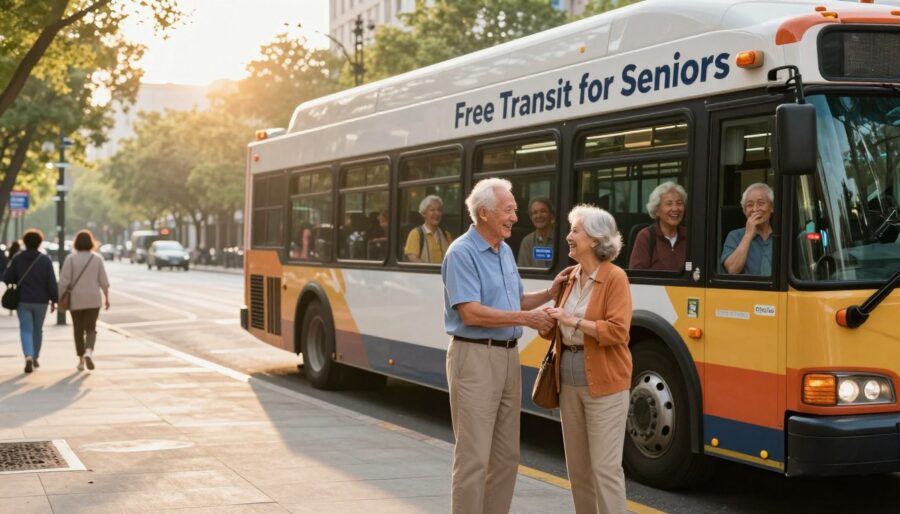
Ever thought your daily trip could be simpler and cheaper? As we get older, we want to stay independent. But, getting around can seem hard.
But, there’s good news. You can find ways to move around freely again. Use the Eldercare Locator at 800.677.1116 to find local help. Many people find out they can get travel perks that make life easier. Looking into these options is a smart move to keep you connected.
Key Takeaways
- Independence is vital for seniors, and accessible mobility options play a key role in maintaining it.
- You can contact the Eldercare Locator at 800.677.1116 to find specific resources in your area.
- Many regions offer programs that help reduce daily travel expenses for eligible residents.
- Checking your eligibility is a simple process that can open doors to new community connections.
- Taking advantage of these services allows you to stay active without the stress of high costs.
The Growing Movement Toward Accessible Public Transportation
As our communities grow older, we must rethink how we provide mobility for everyone. City leaders now focus on inclusive design. They want older residents to stay active and connected to their neighborhoods.
This change is big. It shows how we view urban life is changing. By making things accessible, we help seniors stay independent. They don’t have to rely only on their cars.
Shifting Priorities in Urban Planning
Urban planners now value seamless connectivity more. They’re making sidewalks, transit hubs, and bus stops easier for those with limited mobility.
These changes include better lighting, clear signs, and level-boarding platforms. Investing in these features makes public transit a viable and attractive option for all, no matter their age.
The Impact of Aging Populations on Transit Policy
The fast growth of seniors is making us rethink transit policies. Many local governments are looking into transporte gratuito para adultos maiores. They want to make travel cheaper for seniors.
By removing fare costs, cities encourage seniors to use public transit more. This policy helps seniors get to healthcare, grocery stores, and community centers easily.
Providing transporte gratuito para adultos maiores is a step toward a fairer society. We think when transit is accessible and affordable, our whole community does better.
Understanding Eligibility for Transporte Gratis para Adultos Mayores
Knowing how to get free travel is key to being independent. Many places offer transporte gratis para adultos mayores to keep seniors connected. But, it’s important to know the rules in your area.
Age Requirements and Documentation
Transit places have a minimum age for senior discounts or free rides. This age can change a lot by city or state. Always check your local transit website for your area’s age limit.
To see if you qualify, you’ll need to show certain documents. Agencies want proof of who you are and how old you are. You might need:
- A valid state-issued driver’s license or identification card.
- A birth certificate or passport.
- Medicare cards or other government-issued benefit cards.
In some places, you might need to apply for a voucher program. Keeping your documents in order helps a lot. For more help, check out the carteira do idoso guide on senior documents.
Income-Based Qualifications in Specific Regions
Some areas use income to decide who gets transporte gratis para adultos mayores. These programs help low-income seniors who use public transit a lot. Your income is compared to the federal poverty line to see if you qualify.
If you live in an income-based area, you’ll need to show your financial info. This might include:
- Recent tax returns or Social Security benefit statements.
- Proof of public assistance enrollment.
- Bank statements or income verification letters.
It’s a good idea to call your local transit to ask about income rules. Being proactive with your documents helps you get these important benefits faster.
Federal Initiatives Supporting Senior Mobility
National policies help many programs offer transporte gratuito para idosos across the country. Federal agencies fund and develop the needed infrastructure. This keeps our aging population connected to essential services.
The Federal Transit Administration Role
The Federal Transit Administration (FTA) improves mobility for older adults. They set national standards for transit agencies. This ensures they focus on accessibility.
They work closely with the National Association of Area Agencies on Aging. This helps them understand seniors’ needs in different communities. Together, they support local efforts to offer reliable and affordable travel.
“Effective transportation is not just about moving people; it is about connecting seniors to the healthcare, social activities, and independence they deserve.”
Grant Programs for Senior-Friendly Infrastructure
Federal funding sparks local innovation. The government offers grants to help transit authorities. They upgrade their fleets and facilities to be more senior-friendly.
These grants improve several areas, including:
- Installing low-floor buses for easier boarding.
- Adding audible signals at transit stops for those with visual impairments.
- Developing digital platforms that simplify the process of accessing transporte gratuito para idosos.
By investing in these upgrades, federal initiatives make public transit accessible to all. These programs lay the groundwork for local municipalities. They build sustainable and inclusive transportation networks for the future.
State-Level Programs Providing Free Transit Access
State programs are changing how older people get to where they need to go. They offer transporte gratuito para adultos maiores. This helps keep them connected to their communities.
Case Studies of Successful State Legislation
Some states have made laws that let seniors ride for free or cheap. For example, Massachusetts lets older adults move around cities without paying. These legislative wins show a big push for everyone to be included and healthy.
Washington State also works hard to help seniors. They make sure elderly people can use buses and trains. This makes it easier for seniors to plan their trips.
How States Coordinate with Local Transit Authorities
States and local transit teams work together well. States give the money, and locals run the buses and trains. This teamwork makes sure seniors can travel easily.
In many places, mobility managers help connect seniors with local transport. They explain how to use the services. Their job is key to making sure seniors get the help they need.
| State Program Type | Primary Funding Source | Senior Benefit Level |
|---|---|---|
| Legislative Mandate | State General Fund | Full Fare Exemption |
| Grant-Based Support | Federal/State Partnership | Reduced Fare Access |
| Local Pilot Project | Municipal/State Hybrid | Free During Off-Peak |
Local Municipalities Leading the Way in Fare-Free Travel
In the United States, cities are making sure older adults can travel without money worries. They see local governments as key to giving reliable, daily transportation to seniors. This lets seniors get to important services and fun activities without cost.
City-Wide Programs for Senior Residents
Many cities now offer transporte gratuito para idosos as a basic public service. They use special cards for seniors to ride buses and trains for free. This makes it easier and faster for seniors to travel.
While buses and trains are main ways to get around, some areas also use private services. For example, GoGoGrandparent helps seniors get rides across the country. This mix of services makes sure everyone can find affordable travel options.
Pilot Projects and Their Long-Term Success
Local leaders often start small tests to see if fare-free travel works. They watch how many people use it and its effects on the economy. If it does well, they make it a regular part of the city’s transport.
The table below shows how different cities handle transporte gratuito para idosos. It looks at how well they work and who they help.
| Program Type | Primary Benefit | Target Audience | Sustainability |
|---|---|---|---|
| Universal Fare-Free | High ridership | All seniors | High |
| Income-Based | Targeted support | Low-income seniors | Moderate |
| On-Demand Pilot | Door-to-door access | Limited mobility | High |
When cities focus on these programs, seniors visit local shops and doctors more. By making transit accessible, cities become more welcoming to all. These local efforts are key to helping an aging America.
How Technology Simplifies Access to Senior Transit Services
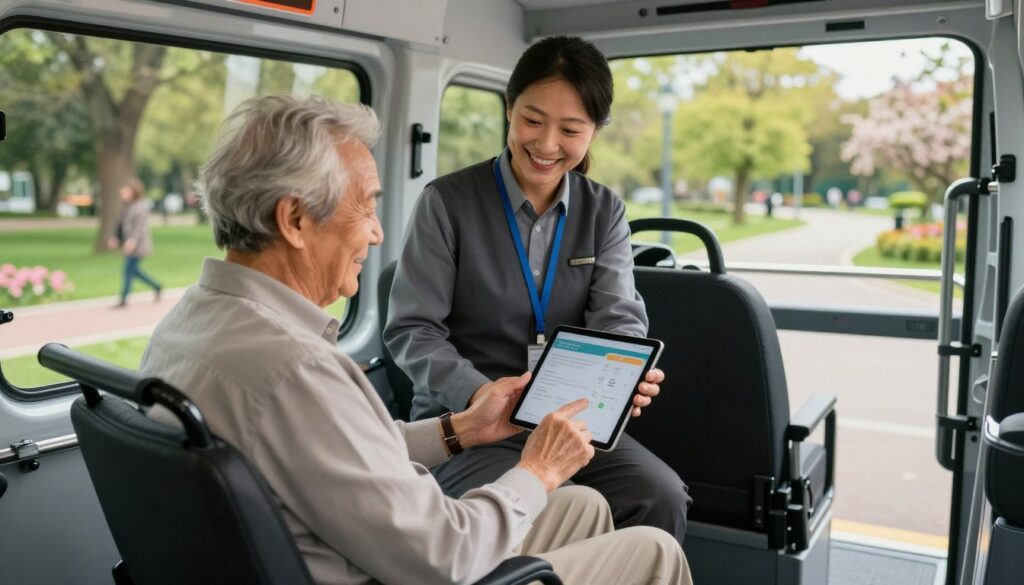
Technology helps seniors stay independent with public transit. It makes serviços de transporte para idosos better and easier. This helps older adults use local transit more.
Mobile Apps for Real-Time Transit Tracking
Mobile apps change how we travel. They show when buses or trains will come. This cuts down waiting time and stress.
Transit apps for seniors are easy to use. They have big text and clear buttons. This helps seniors travel without getting lost.
Digital Fare Cards and Automated Verification
Digital fare cards make boarding faster and safer. Seniors can pay with cards or phones. This means no more lost tickets or exact change worries.
Digital tools are key for better public transit. They make paying easier. This lets transit services improve their service quality.
| Feature | Traditional Method | Digital Solution |
|---|---|---|
| Payment | Cash or Paper Tickets | Contactless Fare Cards |
| Tracking | Static Printed Schedules | Real-Time GPS Updates |
| Verification | Manual ID Checks | Automated Senior Discounts |
| Accessibility | High Physical Effort | User-Friendly Interfaces |
The Role of Non-Profit Organizations in Senior Transportation
When public transit routes don’t reach far enough, non-profits step in. They help seniors stay independent and connected. They offer personalized support that public transit often misses.
Bridging the Gap in Rural Areas
In rural areas, public transit can’t reach every home. Non-profits set up volunteer rides for shopping and doctor visits. These serviços de transporte para idosos are key for those in remote places.
“Transportation is the bridge that connects our seniors to the life-sustaining services they deserve, turning isolation into active participation.”
Volunteers use their cars to help neighbors. This approach makes sure no one is left out because of where they live. It’s a human-centered model that values dignity and reliability.
Partnerships Between Transit Agencies and Charities
Working together is crucial for a good network. Transit agencies and charities team up for better serviços de transporte para idosos. This partnership makes use of resources more efficiently.
By mixing public agency scale with non-profit speed, communities offer seamless transit experiences. These partnerships use shared systems and schedules. They make sure every senior gets the help they need, no matter where they are.
Navigating Paratransit Services for Seniors with Disabilities
We think every senior should have a way to get around, no matter their health. When buses or trains are hard to use, serviços de transporte para idosos help a lot. They make sure you can get to places like doctor’s offices and stores easily.
Defining ADA Requirements for Transit
The Americans with Disabilities Act (ADA) makes public transport better for everyone. It says that places with buses or trains must also have special transport for those who can’t use regular buses. This helps people with disabilities get around safely.
These special services must have wheelchair lifts and safe ways to keep riders in. They also have to be open when regular buses are. This makes sure everyone can travel safely and easily.
Application Processes for Specialized Transit
To get help, you need to apply first. You’ll need a doctor’s note to show you need this service. This helps decide if you qualify for specialized transit support.
After you’re approved, you can book your rides. Many places have special websites or phone numbers for this. Keep your papers ready, as you might need to update them sometimes.
Community-Based Volunteer Driver Programs
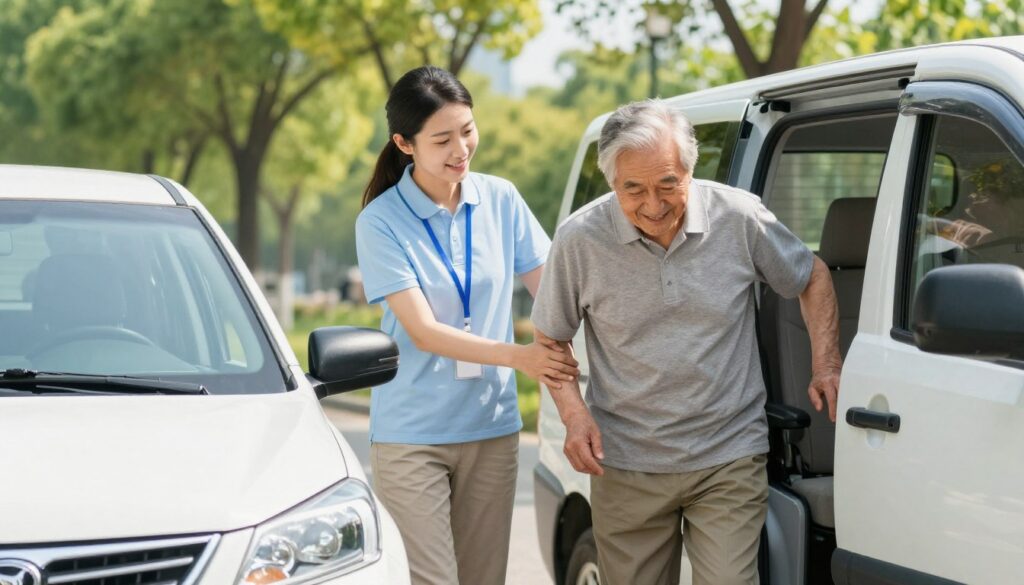
Community-based volunteer driver programs help seniors stay mobile. They offer a flexible and compassionate alternative for those who need help. These services are not always free but are very affordable.
The Human Element in Senior Transit
These programs create a strong human connection between drivers and passengers. Unlike buses, drivers take seniors door-to-door. This makes a big difference for those going to appointments or social events.
Drivers are often neighbors or local community members. They offer a sense of security and care. This helps seniors feel valued and respected.
This model helps those who find public transit hard to use. It keeps seniors independent and safe.
Safety Protocols and Training for Volunteers
Safety is the top priority for these programs. They have rigorous safety protocols in place. This includes background checks for all drivers.
Volunteers also get special training. They learn how to help passengers with mobility or cognitive issues. This training includes safe vehicle entry and empathetic communication techniques.
By following these standards, seniors have access to safe, reliable viagens gratuitas para idosos or low-cost transport.
Overcoming Barriers to Public Transit Adoption
We need to make it easier for older people to get around. Many places offer viagens gratuitas para idosos for free. But, there’s more to making them truly independent.
We must face the physical and mental barriers. These stop seniors from feeling safe on public transit.
Addressing Safety and Accessibility Concerns
Older riders often fear busy stations and boarding buses. To help, many transit agencies have travel training programs.
These programs teach seniors how to use transit safely. They learn to read schedules and use fare technology. This builds their confidence.
With this knowledge, seniors can move around more easily. Feeling safe lets them use viagens gratuitas para idosos more.
Improving Last-Mile Connectivity for Seniors
The “last-mile” problem is when it’s hard to get from home to the bus stop. For many, walking is not an option. Now, we’re finding better ways to solve this.
Local authorities are working with ride-sharing and shuttles. These last-mile solutions take seniors right to their door. This makes public transit a real option for all.
| Barrier Type | Primary Challenge | Proposed Solution |
|---|---|---|
| Physical | Long walking distances | On-demand shuttle services |
| Educational | Complex navigation | Travel training programs |
| Safety | Boarding and alighting | Low-floor vehicle upgrades |
| Financial | Cost of travel | Viagens gratuitas para idosos |
Future Trends in Senior-Focused Transit Infrastructure
We are on the edge of a new era. Technology will change how seniors move around. We’re making systems that help them stay independent and easy to use. This change is key for a good life in a fast-changing world.
Autonomous Vehicles and On-Demand Transit
Autonomous vehicles (AVs) are a big step for seniors. They can take you right to your door. This means no more waiting at bus stops or train stations.
On-demand transit lets you book rides easily online. This means you can get a ride when and where you need it. It helps seniors be more independent.
Sustainable Transit Solutions for an Aging America
We need to build a future that’s good for the planet and for everyone. We’re moving to electric transit to cut down on pollution. This makes our neighborhoods cleaner and healthier for seniors.
Urban planners are working on a few key things:
- Universal Design: Making transit hubs easy for everyone to use.
- Energy Efficiency: Using electric buses to reduce pollution.
- Integrated Connectivity: Making travel smooth by linking digital and physical systems.
By investing in these green technologies, we’re making sure transit stays open to all. These changes will help seniors stay connected to what’s important to them.
Conclusion
Knowing how to get around is key to staying independent. We looked at many ways to help, from big programs to local groups. These tools keep you connected to your community and family.
Planning ahead is the best way to keep moving. Look up your local transit or check out the American Public Transportation Association’s website. These steps help you stay active and confident every day.
Traveling well is important for your health and happiness. By finding good transportation, you can go to appointments, see friends, and enjoy events. We hope this guide helps you find the best ways to travel and enjoy life.
FAQ
How can we find reliable transporte gratuito para adultos maiores in our local community?
Start by using the Eldercare Locator. It’s a public service of the U.S. Administration on Community Living. It helps us find local Area Agencies on Aging (AAA).
These agencies can tell us about transporte gratuito para idosos and other serviços de transporte para idosos in our area.
What documentation do we typically need to prepare to qualify for free transit?
To get transporte gratuito para adultos maiores, we need to show our age. This can be a state-issued ID or Medicare card.
In some places, viagens gratuitas para idosos depend on income. We might need to show a Social Security statement or tax returns to prove we qualify.
How do federal agencies like the Federal Transit Administration support our mobility?
The Federal Transit Administration (FTA) gives grants to local transit. This helps create senior-friendly infrastructure.
It also supports the assistência de transporte para idosos we need for daily life and staying connected with our community.
What role do mobile apps and digital tools play in our transit experience?
Technology makes traveling easier. Apps like Transit or Moovit help us track buses and trains.
Digital fare cards like SmarTrip or TAP make paying for rides simple. These tools make our viagens gratuitas para idosos smooth and predictable.
What options are available if we have difficulty using fixed-route buses or trains?
For those needing special assistência de transporte para idosos, Paratransit services are key. They offer door-to-door or curb-to-curb rides, as required by the Americans with Disabilities Act (ADA).
To use them, we just need to apply at our local transit office. They’ll check if we need the right level of serviços de transporte para idosos.
How do non-profits help us access transporte gratuito para idosos in rural areas?
In rural areas, non-profits like ITNAmerica and local charities help a lot. They work with local agencies to offer viagens gratuitas para idosos.
This way, no matter where we live, we can still get to healthcare and social services.
Are volunteer driver programs a safe and viable option for us?
Yes, they are. Volunteer driver programs offer a caring touch. The drivers go through safety protocols and training to help us.
Many of us find these programs great for medical trips. A little extra assistência de transporte para idosos is always welcome.
What does the future of senior-focused transit look like in the United States?
The future is exciting with autonomous vehicles and on-demand transit. Companies like Waymo and Via are testing new ways to make transporte gratuito para adultos maiores better.
These changes will keep us mobile and independent as we age. They promise a more connected America for us.